How Do I Stop Fake Emails Being Sent from My Domain?
To stop scammers from sending fake emails using your business email domain, you must update your domain's background registry settings with specific identity verification rules that tell receiving servers exactly which mail delivery services are authorized to speak for your company. Once these invisible rules are in place, any email claiming to be from you that originates from an unauthorized server will be automatically blocked or thrown straight into the spam folder before it ever reaches your customers' inboxes. Taking control of these digital records is the only permanent way to lock down your business identity and protect your local reputation from being weaponized by internet impersonators. Geeks on Call of the Triangle can assist Raleigh, Durham and Chapel Hill business owners through a strict five-stage implementation methodology to protect your digital brand without risking your active communications.
It is incredibly frustrating to find out that someone is out there impersonating your business and tricking your clients, vendors, or employees. You probably found out about this mess because a confused customer called to ask about a strange invoice, or because your own inbox is suddenly flooded with automated delivery failure notifications for messages you never actually sent. It makes you feel violated and anxious because your business name is your bond, and right now, tech criminals are exploiting it. The hardest part to swallow is that these hackers do not even need access to your actual computers, password credentials, or your physical office to pull this off. They are simply taking advantage of a massive, decades-old loophole in how the global email system works, which inherently allows anyone to type any return address they want into an outgoing message.
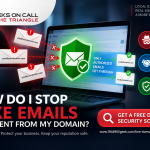
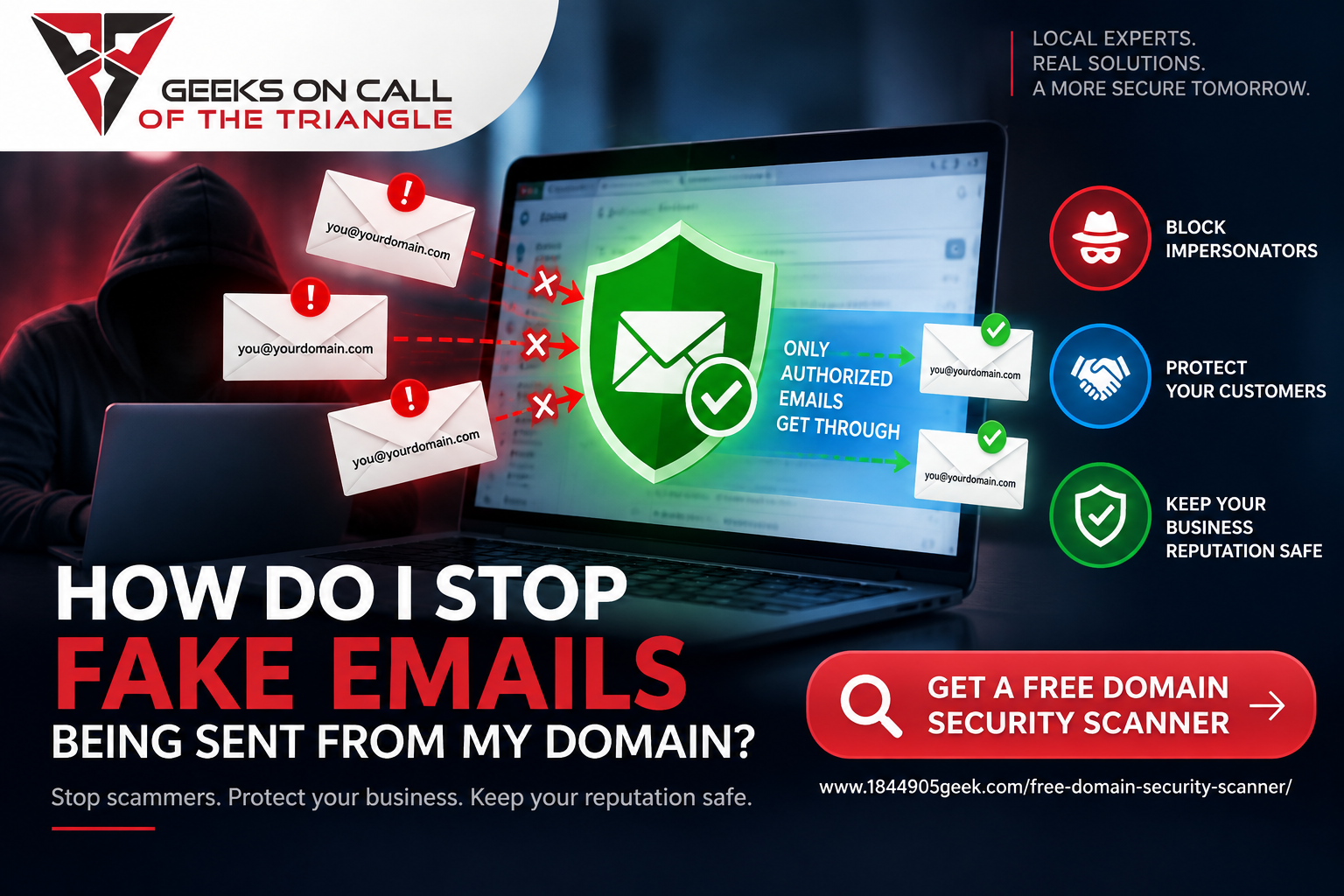
To close this massive loophole once and for all, you need to implement a modern security protocol known as DMARC. This technology is essentially an explicit set of public instructions attached to your web domain that tells every mail provider in the world exactly how to handle unauthorized messages pretending to come from your company. Think of it as a strict security guard standing at the front gate of every inbox, holding a verified list of your permitted mail delivery systems. If an incoming message claims to be from your domain but does not match your official list, the security guard follows your exact orders to either monitor it, quarantine it in the spam folder, or destroy it entirely.
For small business owners and busy office managers handling operations across Chapel Hill, Durham, and the bustling tech hubs of Research Triangle Park, this is an infrastructure problem rather than a personal computer virus. When the global internet email system was first built back in the early days of computing, it was designed entirely on trust. Nobody ever anticipated a world where digital criminals would actively forge the "From" line of an email just like a scammer writes a fake return address on a physical piece of paper envelope. Because the standard system does not naturally check for authenticity, scammers can easily spoof your domain name using third-party mail servers located anywhere across the globe.
To fix this background vulnerability, you or your technology partner must configure three distinct, hidden security records inside your domain registry account. The first record acts as a master list of every single legitimate server allowed to send mail for you, which includes your primary business mail provider along with external tools you might use for billing, scheduling, or marketing newsletters. The second record applies an unforgeable digital signature to every legitimate piece of outbound mail leaving your organization, proving that the content has not been altered in transit. The final layer ties these components together and tells global providers like Google, Microsoft, and local internet providers to strictly reject any message that lacks these valid credentials.
When you do not have these protective digital records activated, your business faces massive financial and operational risks every single day. Sophisticated scammers often use forged addresses to send incredibly convincing fake invoices to your existing clients, tricking them into routing real payments into fraudulent bank accounts. Alternatively, they might impersonate you or your managers in urgent messages to your employees, demanding that they purchase gift cards, reveal sensitive employee data, or wire company funds immediately. Even if nobody falls for the financial tricks, the mere fact that fake emails are circulating under your name heavily damages the hard-earned trust you have built with your community.
Over time, failing to address this issue will cause severe damage to your day-to-day business communication. As global email providers notice a high volume of unverified, spammy messages pretending to come from your domain, they will begin to flag your entire business identity as highly suspicious. Soon, even your completely legitimate everyday emails—like project updates, genuine quotes, and casual customer replies—will start landing directly in your clients' spam folders or getting blocked entirely by corporate firewalls. Your critical communications will suddenly vanish into a black hole, and you will have a nightmare of a time trying to get your business domain off global digital blacklists.
Resolving this situation does not require you to buy expensive new software programs, replace your existing computers, or change your current workplace email addresses. It simply requires a precise, methodical cleanup of the technical records that dictate how your domain interacts with the rest of the global internet. Because every business relies on a unique mix of digital tools for operations, marketing, and payroll, these settings must be mapped out carefully to ensure your real operational tools never get accidentally blocked.
You do not have to navigate this overwhelming technical headache on your own while trying to run your daily business operations. We can help you figure out exactly where the leaks are coming from and stop the impersonation for good. Come visit us to get a completely free domain check at https://www.1844905geek.com/free-domain-security-scanner/ to see your current vulnerability status, or feel free to book a free five minute call at https://www.1844905geek.com/contact-us/ so we can chat about a straightforward plan to lock things down.
Elmer Hill, PMP
CEO and President
Geeks on Call of the Triangle